
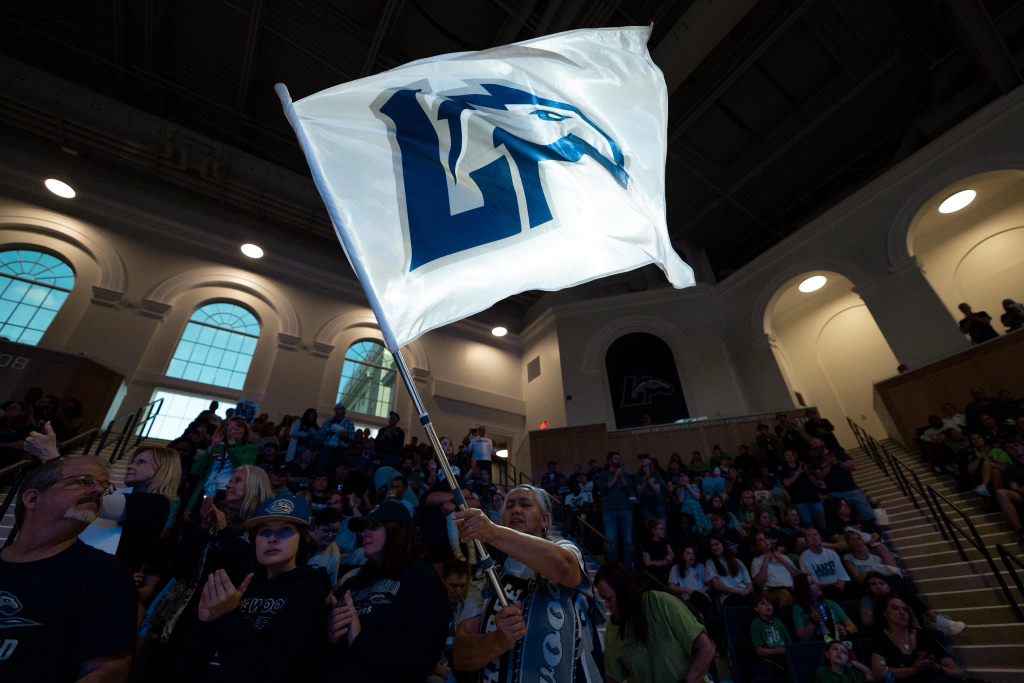
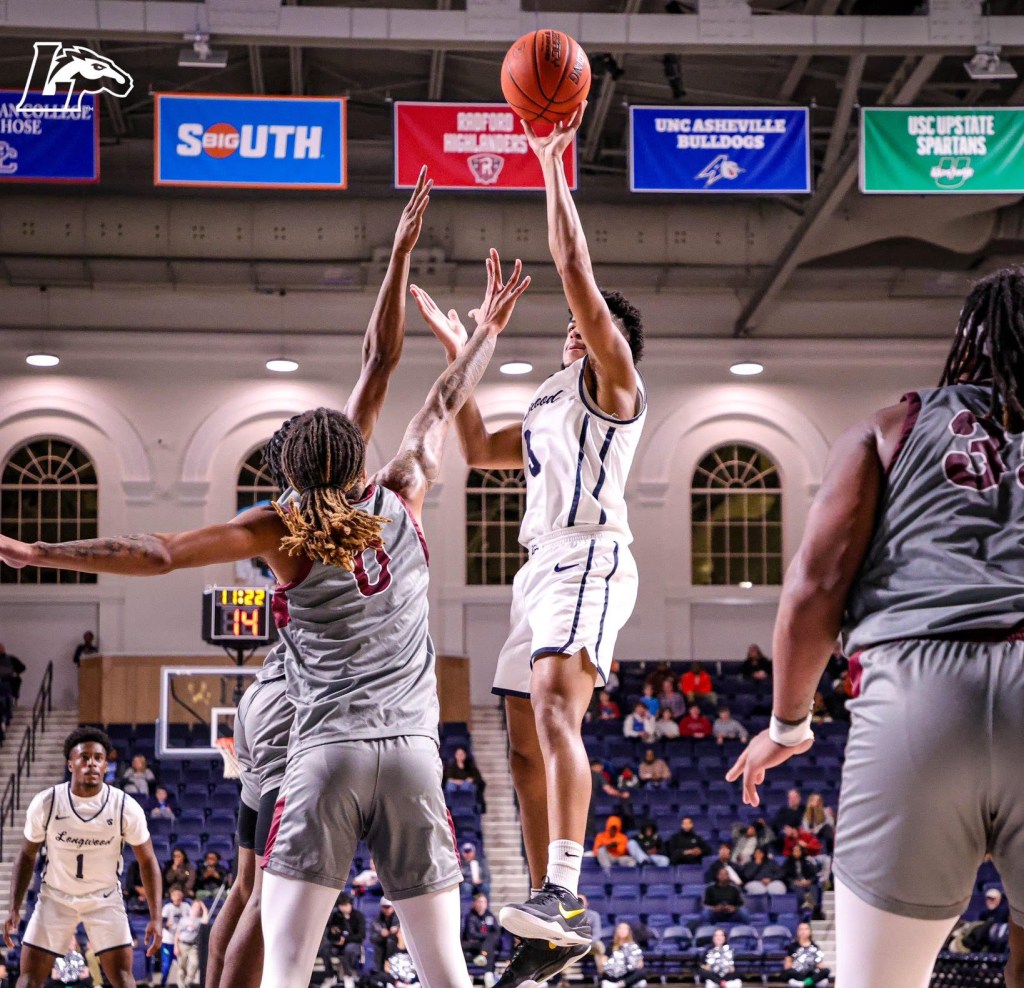
The Longwood Lancers under the direction of Head Coach Griff Aldrich just concluded their second NCAA Tournament run in three years with 46-86 loss to Houston. For those watching, the matchup felt largely reminiscent of the Lancers’ first appearance in 2022 where they lost to the 3 seed Tennessee Volunteers 56-88.
Aldrich has done a phenomenal job turning this program around in a short time period. For a team with just a single winning season in their Division I history, a 17-14 record in the 2007-2008 season under coach Mike Gillian, the fact that this Lancer squad posted its third consecutive 20 win season and second Big South title can not be written about enough. Griff Aldrich has worked miracles. For the first time in recent memory, the culture at Longwood is winning. Tell that to fans from fifteen years ago, they would be astounded.
The question now is, how do the Lancers take the next step? Now that they are regularly competing for Big South Championships, how can they become relevant in the Tournament? The answer, as with most things in life, lies with money.
NIL – The Key Ingredient
NIL has been a hot topic in the past year after the ruling that allowed collegiate athletes to be paid for use of their Name, Image, and Likeness. The caveat for this however, is that universities are not allowed to pay athletes directly for their participation. As you can imagine, there is a workaround for this.
University supporters, in collaboration with universities, have created NIL collectives to help fund and support athletes. These collectives are much more prominent at power 5 and upper major schools, with many mid major and low major companies simply choosing to pay an outside firm to handle their student athlete’s NIL money. Longwood is one of the few Big South members to launch their own NIL collective, Excellence Through Service. By having a dedicated collective, Longwood is laying the foundation of becoming an athletic powerhouse, however this is all dependent on how they choose to use this moving forward.
While Longwood is one of the few Big South members to have their own collective, they are not alone. Most notably they are joined by their rivals to the south in High Point. Being a private institution, most information regarding their NIL collective is not public, however if it is anything like the school itself, it is a safe bet to assume it is well funded. Longwood however, is a public institution, which leads us to be able to learn a little bit more into how NIL is being handled in Farmville.

The good people over at nil-ncaa.com have put a lot of work in to make NIL collectives as transparent as possible, even as many official numbers are shrouded in secrecy. They have Longwood’s NIL collective near the bottom of all Division I schools, with support of $195,000, most of which is likely being focused on Griff Aldrich’s team. While that is no small chunk of change for you and I, it is hardly enough to compete with the big dogs of Division I. For example, the Lancers first round opponent Houston has an NIL collective contribution of over two million dollars. That’s, an insane difference.
This is unfortunately where alumni, fans, and supporters of the Lancers are going to have to pool their money, and the university will need to continue to push support in this direction. Student athletes, just like anyone else, are going to go where they are able to earn the most money. To entice future high level recruits, the Lancers are going to have to literally pay up. This is not an impossible feat.
They have already shown a willingness to invest in team success, as is evidenced by the beautiful new Joan Perry Brock Center, as well as their new Basketball Performance Center that opened in 2022. But Division I athletics isn’t cheap.
Just ask in state rival James Madison. They have supplemented their $1.2 million NIL collective by increasing the fees charged to their student body to an astounding $5662 this year. While it would obviously not be in Longwood’s best interest to increase fees this much, it does provide a blueprint for school officials to follow. After all, JMU has been immediately successful in both football and basketball during their transition to the Sun Belt Conference.
While Longwood will obviously not pull as much money in as JMU simply due to the fact that they do not field a football team, although it would be beneficial to both the school and its students, they should be able to increase the funding currently going towards the Lancers. As they do that, the athletes themselves will need to continue to see larger amounts of it if the Lancers want to be taken seriously the next time they partake in March Madness.


 Blue & White Spotlight
Leave a comment